Nabulsi cheese
Palestinian white brined cheese from Nablus, used in knafeh.

Cepyles · CC BY-SA 4.0
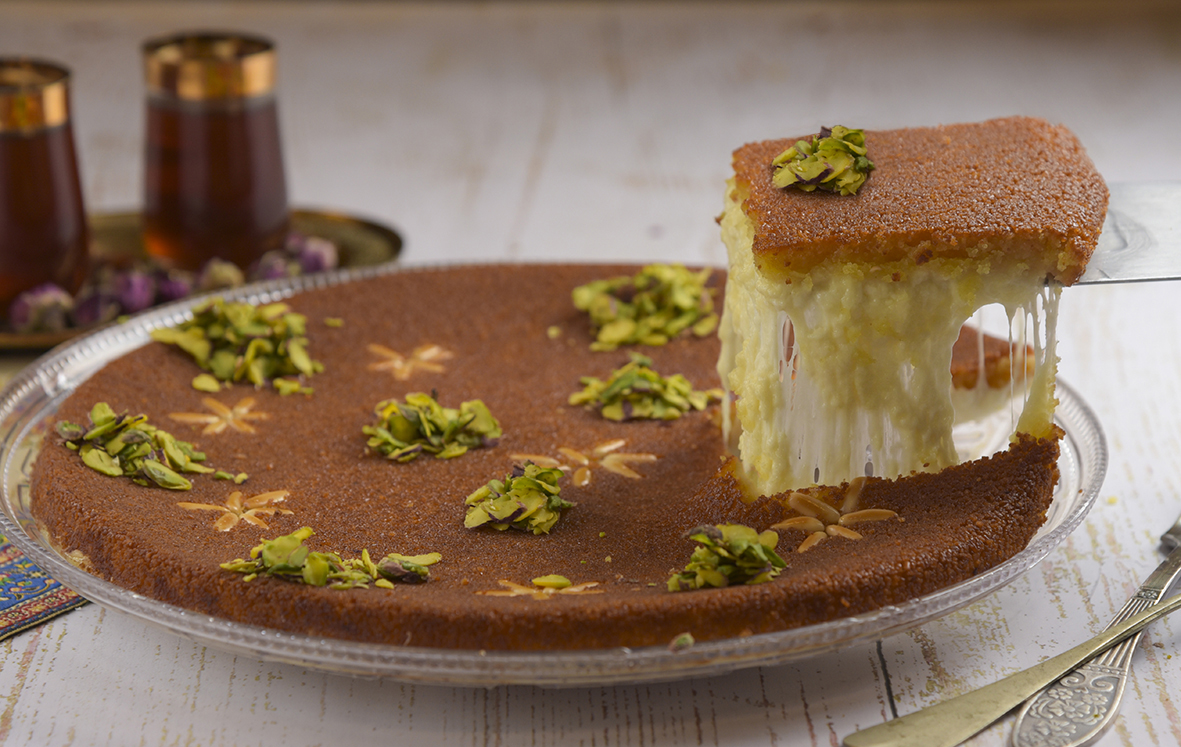
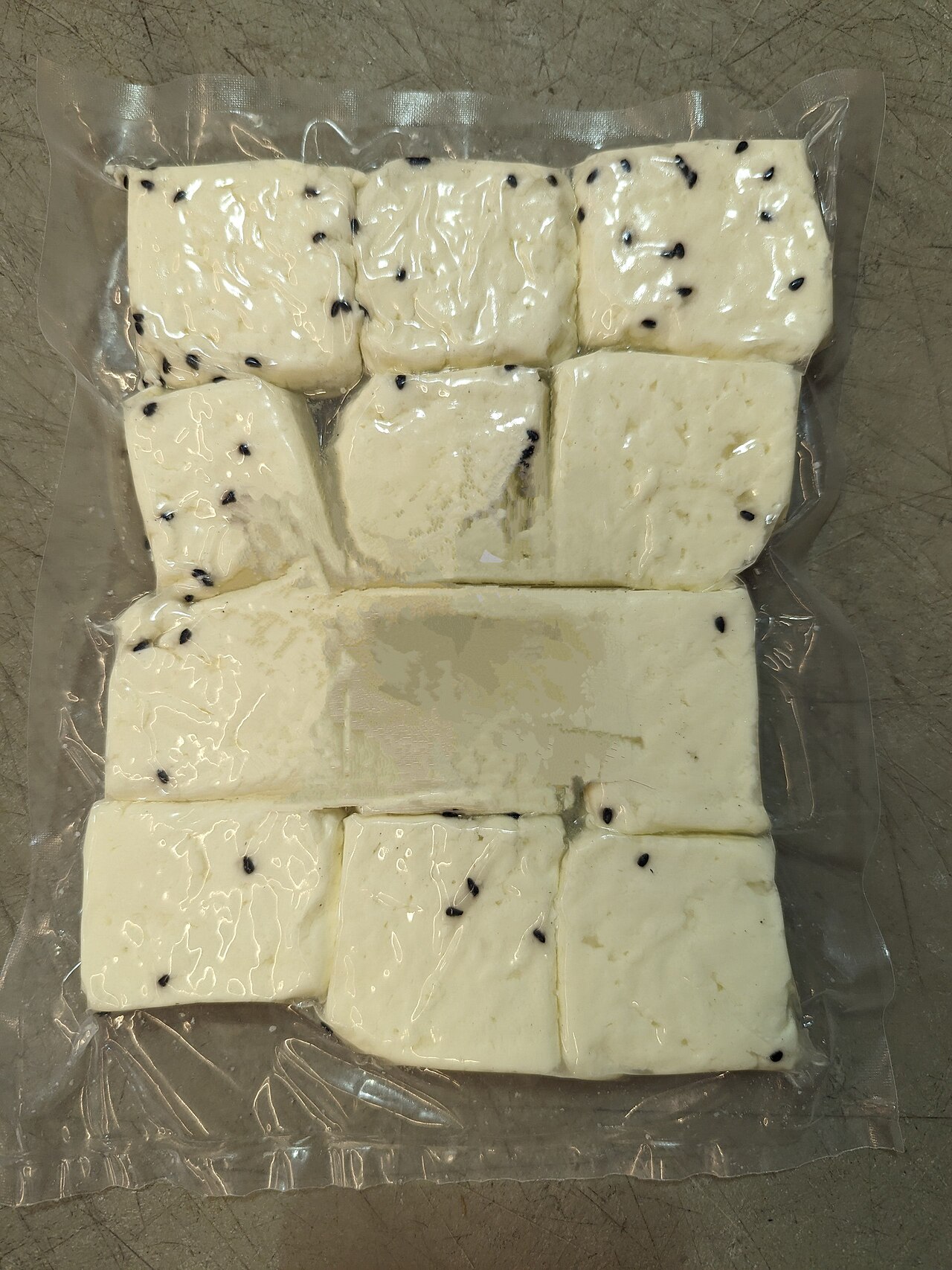
Nabulsi cheese is a white brined cheese from Palestine, named after the city of Nablus, its place of origin. It is well known across the West Bank and nearby areas. Alongside Akkawi cheese, it is one of the main cheeses eaten in Jordan. The cheese is mostly made from sheep's milk, though goat's milk can also be used. It has a white color, a rectangular shape, and a semi-hard texture without gas holes. When heated, it becomes soft and stretchy. Traditionally, the cheese is flavored with mahleb and mastic, which are added to the boiling brine. Nabulsi is a key ingredient in the Middle Eastern dessert knafeh.
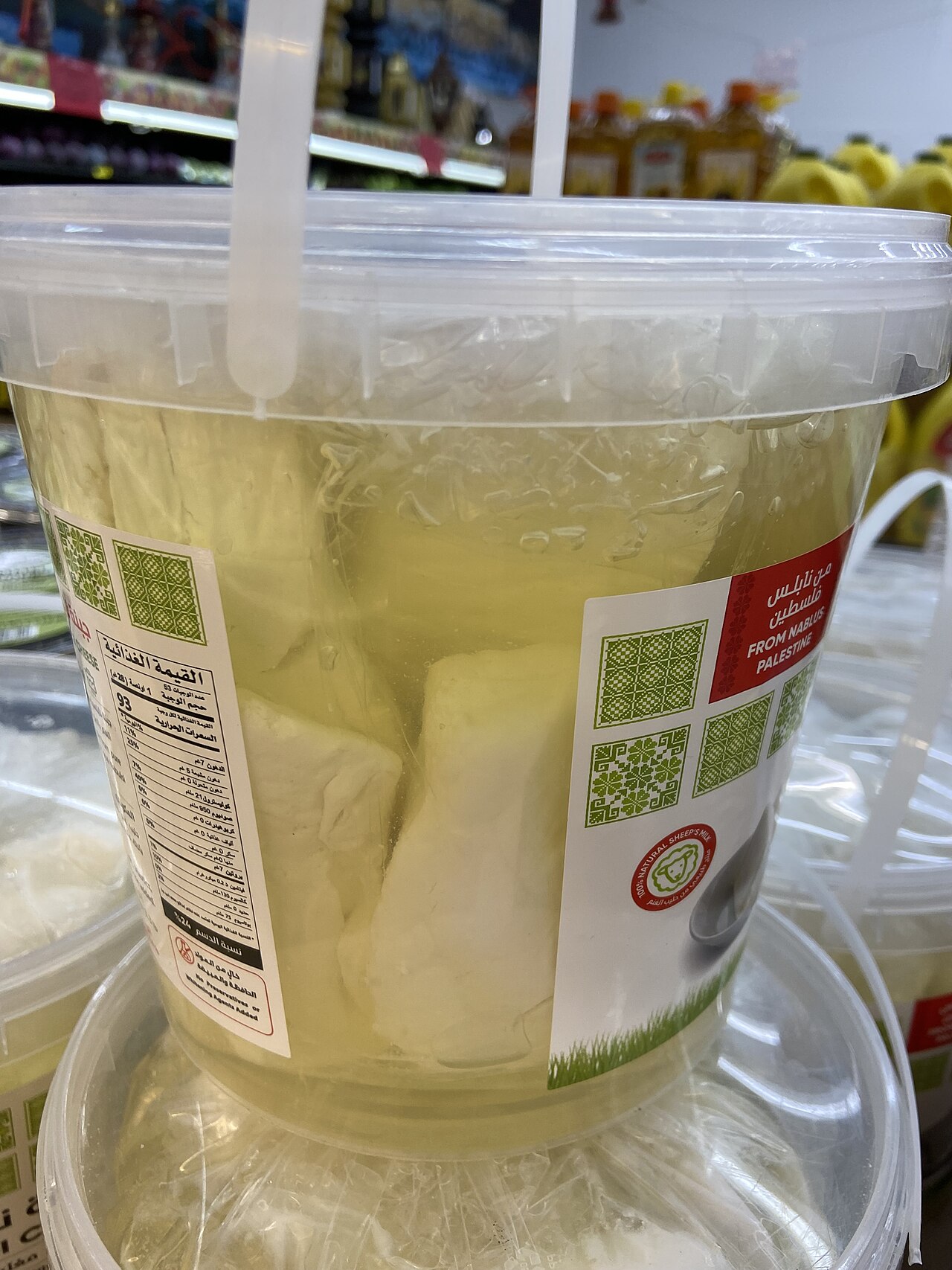
**Production** The cheese can be made from cow, sheep, or goat milk, or a mix of cow and sheep milk, which produces a variety called mashmouleh. To make it, milk is heated and rennet is added. Once the milk curdles, the curds are pressed, cooled, cut, boiled, and then stored in brine. Mastic gum and mahaleb are traditionally added to the brine for flavor. Nabulsi cheese is typically made in spring, when pastures are green.
**Consumption** This cheese is widely used in the Middle East and Southeast Europe, appearing in both sweet and savory dishes. After preparation, it is kept in brine. It can be desalted later for use in baked goods and desserts like knafeh, where its stretchiness is valued. It may also be eaten fresh or fried in olive oil. To reduce saltiness, the cheese is soaked in fresh water, often refrigerated, for several hours or overnight. In places where Nabulsi cheese is hard to find, recipes sometimes substitute it with mozzarella and/or ricotta, sometimes combined with other softer cheeses, to mimic the texture of heated Nabulsi.
**Health Concerns** The high salt content of brined Nabulsi cheese may be a concern for people with conditions like hypertension or kidney stones. Sellers often increase the salt level to help preserve the cheese during storage. For this reason, the World Health Organization recommends reducing the saltiness before eating it.
- type
- Brined cheese
- origin
- Nablus, West Bank
- milk_source
- Sheep's milk (primarily); goat's milk may be used
- texture
- Semi-hard, no gas holes; becomes soft and elastic when heated
- shape
- White and rectangular
- flavoring
- Mahleb (Prunus mahaleb) and mastic (Pistacia lentiscus) added to boiling brine
- primary_use
- Major ingredient of the Middle Eastern dessert knafeh
Lore & Background
Nabulsi cheese is first prepared by heating milk and adding rennet. After the milk coagulates, the curds are pressed, cooled, cut, then boiled, and finally stored in brine. The cheese is traditionally flavored by adding mastic gum and mahaleb to the brine. It is typically made during spring, when pastures are green.
The cheese can be prepared using cow, sheep or goat milk, or a mixture of cow and sheep milk to create mashmouleh cheese. After preparation, it is stored in brine and may later be desalted for use in bakery goods and desserts such as knafeh, where the stretchability of the cheese is desired. It may also be eaten fresh or fried in olive oil.
In regions where Nabulsi cheese is not readily available, some recipes substitute it for mozzarella and/or ricotta, sometimes combined with other softer cheeses, to replicate the texture of heated Nabulsi cheese.
Reader's Guide
Nabulsi cheese holds significance as a traditional Palestinian cheese named after its city of origin, Nablus, and is widely consumed in the West Bank, Jordan, and surrounding regions. Its legacy is tied to its essential role in the Middle Eastern dessert knafeh, where its stretchability when heated is prized. The cheese is notable for its production primarily from sheep's milk, with goat's milk as an alternative, and its distinctive flavoring from mahleb and mastic added to the boiling brine. The high salt content of brined Nabulsi cheese, intentionally increased by sellers for preservation, raises health concerns for individuals with hypertension or kidney stone disease, leading the WHO to recommend reducing saltiness before consumption. The cheese's adaptability is seen in its use in both sweet and savory dishes, and its substitution with mozzarella or ricotta in areas where it is unavailable underscores its unique textural qualities. Nabulsi cheese remains a key element of Palestinian culinary tradition and regional cuisine.
Did You Know?
- Nabulsi cheese is named after the city of Nablus in the West Bank.
- It is traditionally flavored with mahleb (Prunus mahaleb) and mastic (Pistacia lentiscus) added to the boiling brine.
- The cheese becomes soft and elastic when heated, making it ideal for knafeh.
- Its high salt content is intentionally increased by sellers to help preserve the cheese in storage.
Origins & Regional Identity
Nabulsi cheese carries the name of its birthplace, the city of Nablus, and has long served as a defining dairy product of Palestinian cuisine. This white, rectangular, semi-hard cheese is recognized across the West Bank and the broader surrounding regions, where it occupies a place of everyday importance. In Jordan, Nabulsi stands alongside Akkawi as one of the two principal cheeses consumed by the population, underscoring its deep-rooted presence in the regional diet. What distinguishes Nabulsi from many other brined cheeses is its texture: it contains no gas holes and, when subjected to heat, transforms from a firm block into a soft, elastic mass that stretches and melts with remarkable pliability. Traditionally crafted from the milk of ewes or goats, it represents a pastoral product tied to the rhythms of seasonal grazing. Its identity is inseparable from both its geographic roots and its sensory character, making it far more than a simple dairy item—it is a cultural marker of the Levantine table.
Production & Seasonal Craft
The making of Nabulsi follows a methodical sequence that transforms raw milk into a storable, brined product. The process begins with heating the milk—most commonly sheep's milk, though goat's milk is a traditional alternative, and cow's milk may also be used, sometimes blended with sheep's milk to produce a variant known as mashmouleh. Once the milk is warm, rennet is introduced to trigger coagulation. The resulting curds are then pressed, cooled, and cut into the characteristic rectangular blocks. These blocks are boiled before being submerged in a salt brine for storage. A defining step in the traditional method involves flavoring the boiling brine with two aromatic additions: mahleb, derived from Prunus mahaleb, and mastic gum, sourced from Pistacia lentiscus. These botanicals impart a subtle, distinctive note that sets Nabulsi apart from unflavored brined cheeses. Production is typically timed to the spring season, when pastures are lush and green, ensuring the milk carries the freshest quality from well-fed flocks.
Culinary Versatility & the Knafeh Connection
Nabulsi's role in the kitchen extends well beyond a single preparation. Across the Middle East and into Southeast Europe, it appears in both sweet and savory applications. Its most celebrated use is as the star ingredient in knafeh, a beloved Middle Eastern dessert where the cheese's ability to become soft and elastic under heat is essential to the dish's signature pull. Before such uses, the cheese is often desalted by soaking it in fresh, refrigerated water for several hours or even overnight, a step that tames its briny intensity and makes it suitable for bakery goods and confections. In savory contexts, Nabulsi may be enjoyed fresh straight from the brine or fried in olive oil until golden and tender. Where the cheese is not locally available, cooks in other regions attempt to approximate its heated texture by combining mozzarella and ricotta, sometimes with additional soft cheeses, though these substitutes only partially capture the unique stretch and melt that genuine Nabulsi delivers.
Preservation, Salt & Health Considerations
The brine in which Nabulsi is stored is not merely a byproduct of its making—it is a deliberate preservation strategy. Sellers intentionally maintain a high salt concentration in the brine to extend the cheese's shelf life and protect it during storage. However, this very characteristic that keeps the cheese viable also raises dietary concerns. The elevated sodium content means that individuals managing hypertension or kidney stone disease are often advised to limit or avoid brined Nabulsi in its as-stored form. The World Health Organization specifically recommends reducing the cheese's saltiness before consumption, a practice that aligns with the traditional desalting step of soaking in fresh water. This creates an interesting tension at the kitchen table: the same salt that preserves the cheese and gives it its characteristic tang must be partially removed before it is safe and comfortable for many people to enjoy. The desalting process, therefore, is not simply a culinary preference but a practical health measure embedded in the cheese's everyday use.
Gallery
Frequently Asked Questions
What is Nabulsi cheese?
Nabulsi cheese is a traditional white brined cheese that traces its roots to the city of Nablus in the West Bank. It comes in a rectangular block with a semi-hard, hole-free texture and is one of the two most popular cheeses eaten across Palestine and Jordan.
What gives Nabulsi cheese its signature flavor?
During preparation, the cheese is cured in a boiling brine infused with mahleb (from the Prunus mahaleb tree) and mastic (from Pistacia lentiscus). These two aromatics are what distinguish it from other plain brined cheeses in the region.
What milk goes into Nabulsi cheese?
The curd is made predominantly from sheep's milk, though goat's milk can be used as an alternative or blend. After coagulation, the cheese is pressed into its rectangular shape and stored in salted brine.
Why is Nabulsi cheese a star in Middle Eastern desserts?
When heated, the semi-hard curd turns soft and stretchy, which is exactly the melt-and-pull quality needed for knafeh and similar layered pastries. That elastic behavior under heat is the main reason it has become a go-to cheese for bakers across the Levant.
How is Nabulsi cheese different from Akkawi cheese?
Both are white brined cheeses that dominate the Jordanian and West Bank cheese tables, but Nabulsi is specifically tied to Nablus and carries the mahleb-and-mastic brine flavor. Akkawi follows a separate regional tradition and does not rely on those two aromatic additives.
More in Palestinian inventions 1-24
Spotted an error? Know more?
This is a living reference — every entry is fact-audited, and reader corrections feed straight into our audit queue. Suggest an edit · See this site's audit record