Nabulsi soap
Traditional olive oil soap from Nablus, prized for centuries.

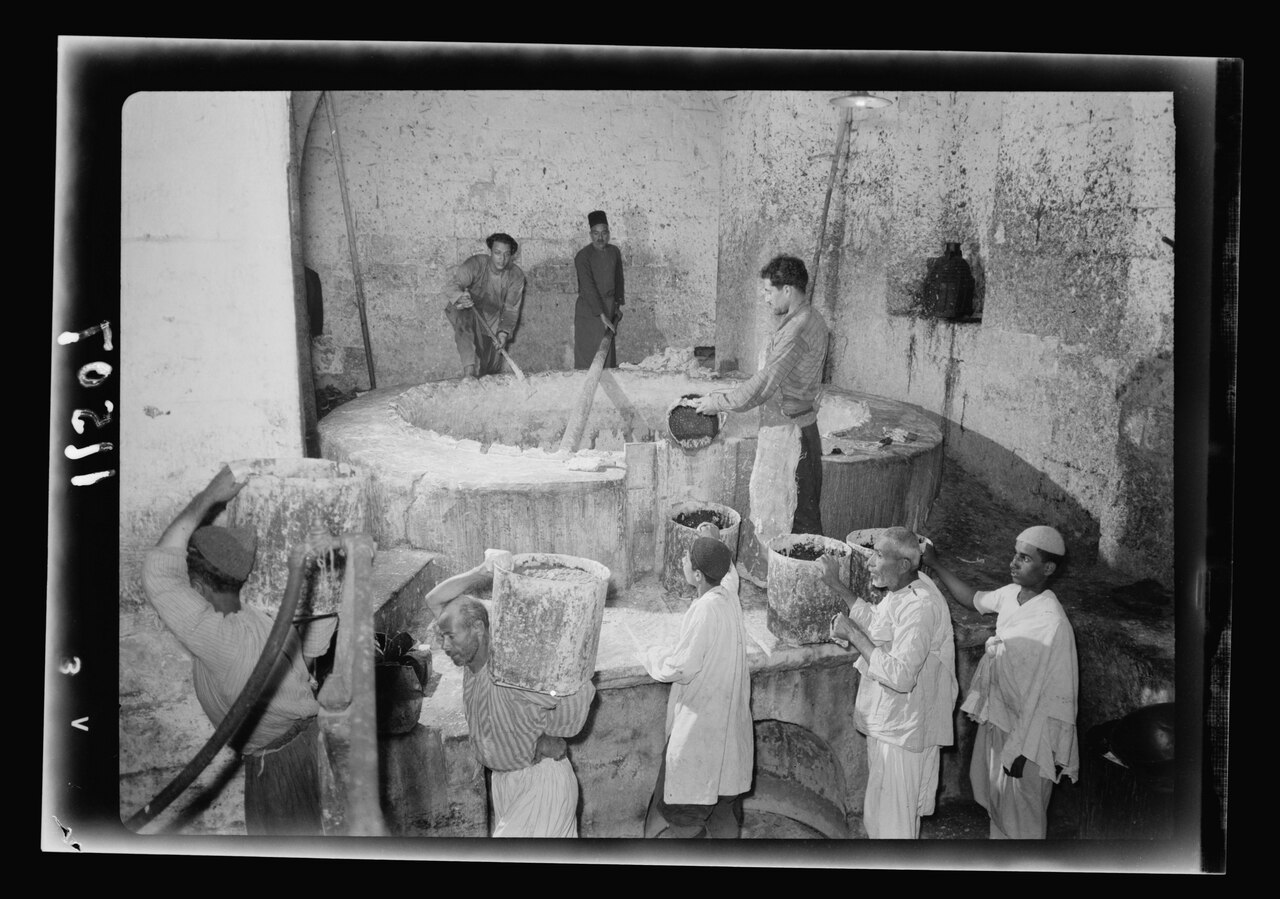
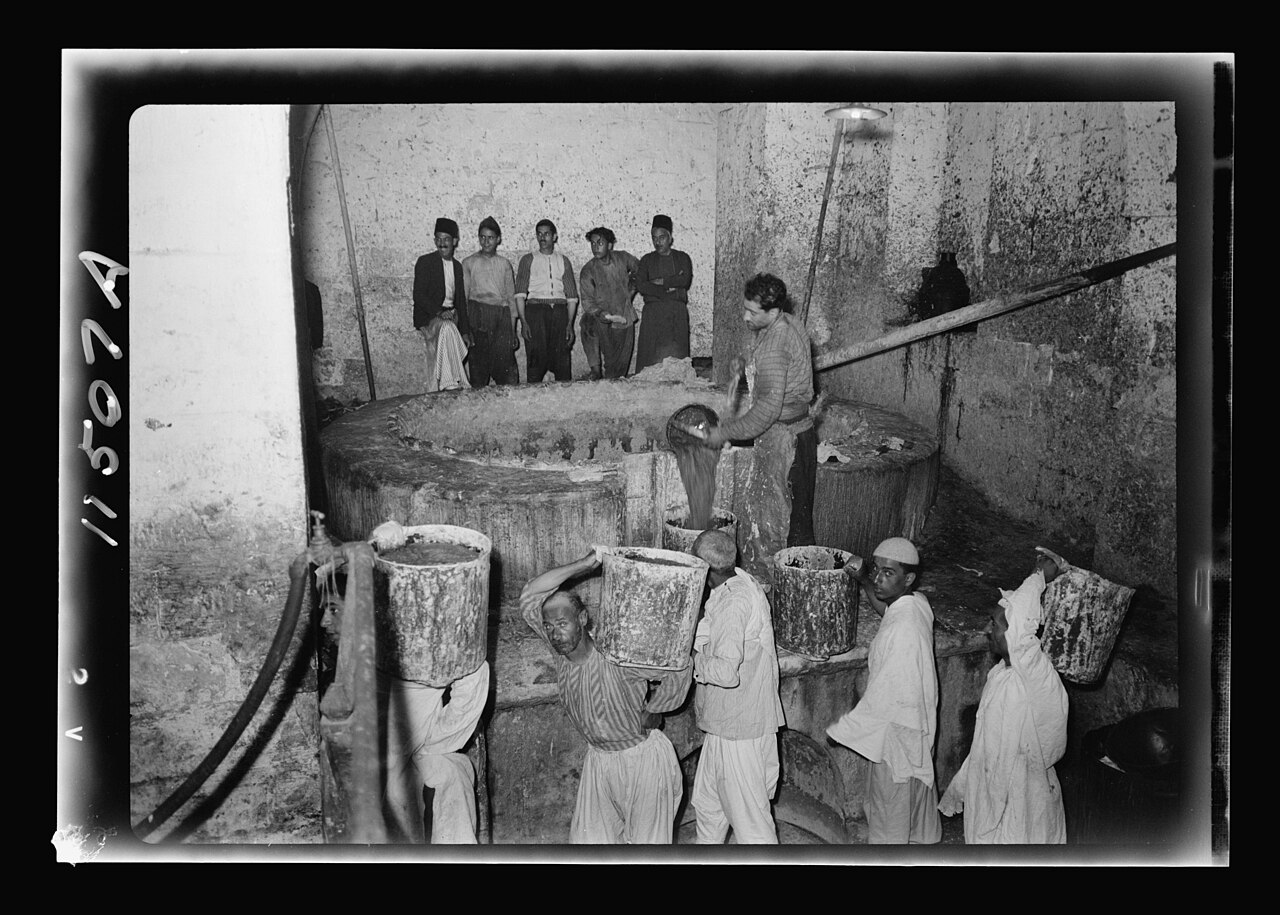
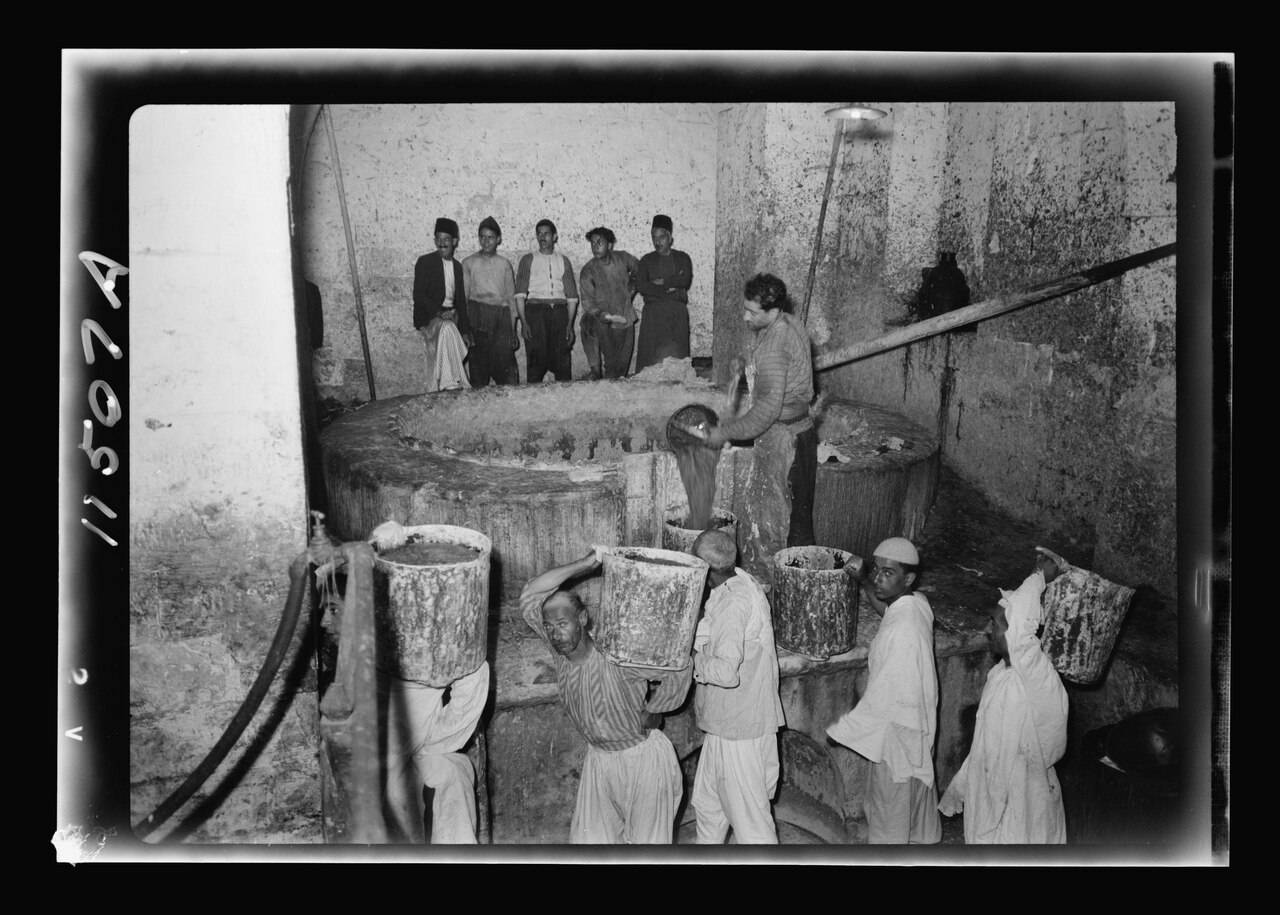
Matson Collection · Public domain
Nabulsi soap is a hard, olive oil-based soap produced in the Palestinian city of Nablus. It is made from virgin olive oil, water, and an alkaline sodium compound like sodium hydroxide. The soap has an ivory color and is nearly scentless. Women originally made it for home use, but by the 14th century, soap-making had grown into a major local industry. In 1907, Nablus had 30 factories that produced half of all soap in Palestine.
The industry began to decline in the mid-20th century. The 1927 Jericho earthquake destroyed much of Nablus’s Old City, and later the 1967 Arab–Israeli War and the Israeli occupation of the West Bank caused further damage. As of December 2022, at least five soap factories were still operating in Nablus.
Soap-making in Nablus predates the first small factories, which appeared in the 10th century. Trade with Bedouins was essential because they were the only source of the alkaline soda (qilw) needed for the process. By the 14th century, Nabulsi soap was exported across the Middle East and Europe. In the 16th century, Jerusalem’s olive-oil soap was sold in Nablus, even though Nablus made its own. Historian Amnon Cohen noted that Nabulsi soap did not compete with Jerusalem soap until the late Ottoman period, when it became the best in Palestine. At that time, Jerusalem was the main soap producer in Palestine and possibly Greater Syria.
The 19th century saw a major expansion. Nablus became the center of soap production across the Fertile Crescent. By 1907, its 30 factories produced nearly 5,000 tons annually, more than half of Palestine’s total. In the 1830s, John Bowring wrote that Nabulsi soap was “highly esteemed in the Levant.” Syrian historian Muhammad Kurd Ali wrote in the 1930s that it was the best and most famous soap because it was unadulterated and well made. During the British Mandate, competitors included cheaper soaps from Jaffa-Ramla made with linseed or coconut oil, but that industry declined while Nablus’s held its market. Another competitor was Shemen Industries Ltd., a Jewish company in Haifa. According to historian Deborah Bernstein, Shemen soap was cheaper but did not replace Nabulsi soap. However, Shemen marketed its soap as “as refined as the Nablus soap” and dyed it red to resemble Arab-produced soaps.
In December 2023, UNESCO recognized Nabulsi soap as part of the Intangible Cultural Heritage of Humanity.
The dec
- origin
- Nablus, Palestine
- field
- Soap-making
- known_for
- Olive oil-based hard soap, ivory-colored, nearly scentless
- peak_production
- 1907: 30 factories produced half of all soap in Palestine
- current_status
- At least five factories operating as of December 2022; two in the Old City as of 2008
Lore & Background
Nabulsi soap was traditionally made by women for household use, even before the appearance of small soap-making factories in the 10th century. Trade with Bedouins was indispensable for soap-making, both in Nablus and Hebron, since they alone could furnish the alkaline soda (qilw) required by the process. By the 14th century a significant soap-making industry had developed in Nablus and the soap was exported throughout the Middle East and Europe. In the 16th century, Nabulsi soap was reportedly prized by Queen Elizabeth I of England.
The 19th century saw a major expansion of soap manufacturing in Nablus, which became the center of soap production throughout the Fertile Crescent. By 1907, the city's 30 factories were producing nearly 5,000 tons of Nabulsi soap annually.
Reader's Guide
Nabulsi soap represents a centuries-old craft deeply tied to the cultural and economic identity of Nablus. Its production, relying on local olive oil and a traditional alkaline compound from the barilla plant, reflects a sustainable, pre-industrial process. The soap's reputation for purity—unadulterated and well-produced—made it a leading export across the Middle East and Europe, even reportedly prized by Queen Elizabeth I. The industry's decline due to the 1927 earthquake and later Israeli occupation illustrates how geopolitical events can disrupt traditional economies. Despite these challenges, the soap remains a symbol of Palestinian heritage, with UNESCO recognizing 'Tradition of Nabulsi soap making in Palestine' as an intangible cultural heritage in need of urgent safeguarding in December 2024. The survival of at least five factories as of 2022, and efforts to restore old factories into cultural centers, show ongoing resilience. The soap's continued production and export, albeit reduced, maintain a link to a craft that once supplied half of Palestine's soap.
Did You Know?
- Nabulsi soap is made from virgin olive oil, water, and an alkaline sodium compound, and is ivory-colored with almost no scent.
- By 1907, Nablus's 30 soap factories produced over half of all soap in Palestine.
- The 1927 Jericho earthquake destroyed much of the Old City of Nablus, contributing to the industry's decline.
- In December 2024, UNESCO recognized 'Tradition of Nabulsi soap making in Palestine' as an intangible cultural heritage in need of urgent safeguarding.
Ancient Roots and Bedouin Partnerships
Nabulsi soap traces its origins to domestic craft, where women in Nablus prepared olive-oil wash for their own households long before any commercial operation existed. Small dedicated workshops only emerged around the 10th century, yet the recipe's success hinged on a relationship that stretched far beyond the city walls. The Bedouin tribes were the sole suppliers of qilw, the powdered ashes of the barilla plant that provided the essential alkaline soda for saponification. Without this Bedouin contribution, neither Nablus nor Hebron could have produced soap at scale. By the 14th century the craft had matured into a full-fledged industry, and the finished ivory blocks—virtually scentless—were shipped across the Middle East and into European markets. English records even credit Queen Elizabeth I with a fondness for the product. During the 16th century, olive-oil soap from Jerusalem was still sold inside Nablus, and historian Amnon Cohen noted that the two cities did not truly compete until the late Ottoman era, when Nablus finally claimed the title of Palestine's premier soapmaker.
The Nineteenth-Century Boom and Market Dominance
The 1800s transformed Nablus from a regional workshop cluster into the undisputed hub of soap manufacturing across the entire Fertile Crescent. By 1907 the city operated thirty dedicated factories turning out roughly five thousand tons of soap each year—more than half of every bar produced in Palestine. Contemporary observers echoed the product's prestige: John Bowring praised it in the 1830s as highly esteemed throughout the Levant, and Syrian historian Muhammad Kurd Ali declared in the 1930s that its unadulterated, carefully crafted quality set it apart from every rival. Even during the British Mandate, when cheaper competitors appeared—linseed- and coconut-oil bars from the Jaffa-Ramla district, and the lower-priced Shemen brand out of Haifa—the Nablus industry held its ground. The Jaffa-Ramla operation eventually faded, while Shemen, though marketed as "as refined as the Nablus soap" and even dyed red to mimic Arab-produced blocks, never fully displaced the original. Nablus soap's reputation for purity and consistency kept it at the top of the regional market for generations.
Earthquake, War, and the Long Squeeze
The industry's downward slide began in the mid-twentieth century and was compounded by successive shocks. The 1927 Jericho earthquake leveled large portions of Nablus's Old City, damaging the very workshops where soap was made. The 1967 Arab-Israeli War and the subsequent Israeli occupation of the West Bank introduced a second, more persistent layer of difficulty. During the Second Intifada, military raids in the historic quarter destroyed additional factories. The General Manager of the Touqan family's operation recalled that before 2000 the plant produced six hundred tons a year; by 2008, checkpoints and roadblocks had cut output to barely half that figure. The United Nations Office for the Coordination of Humanitarian Affairs documented how those same barriers made it hard to transport raw materials in and to get workers to their shifts. Factory counts tell the story: roughly thirty in late 2004, about twenty by 2005, and only at least five still operating in the city by December 2022. A 2020 report noted one surviving factory now made two hundred to five hundred kilograms daily, down from three tons three decades earlier.
A Living Heritage on the Brink
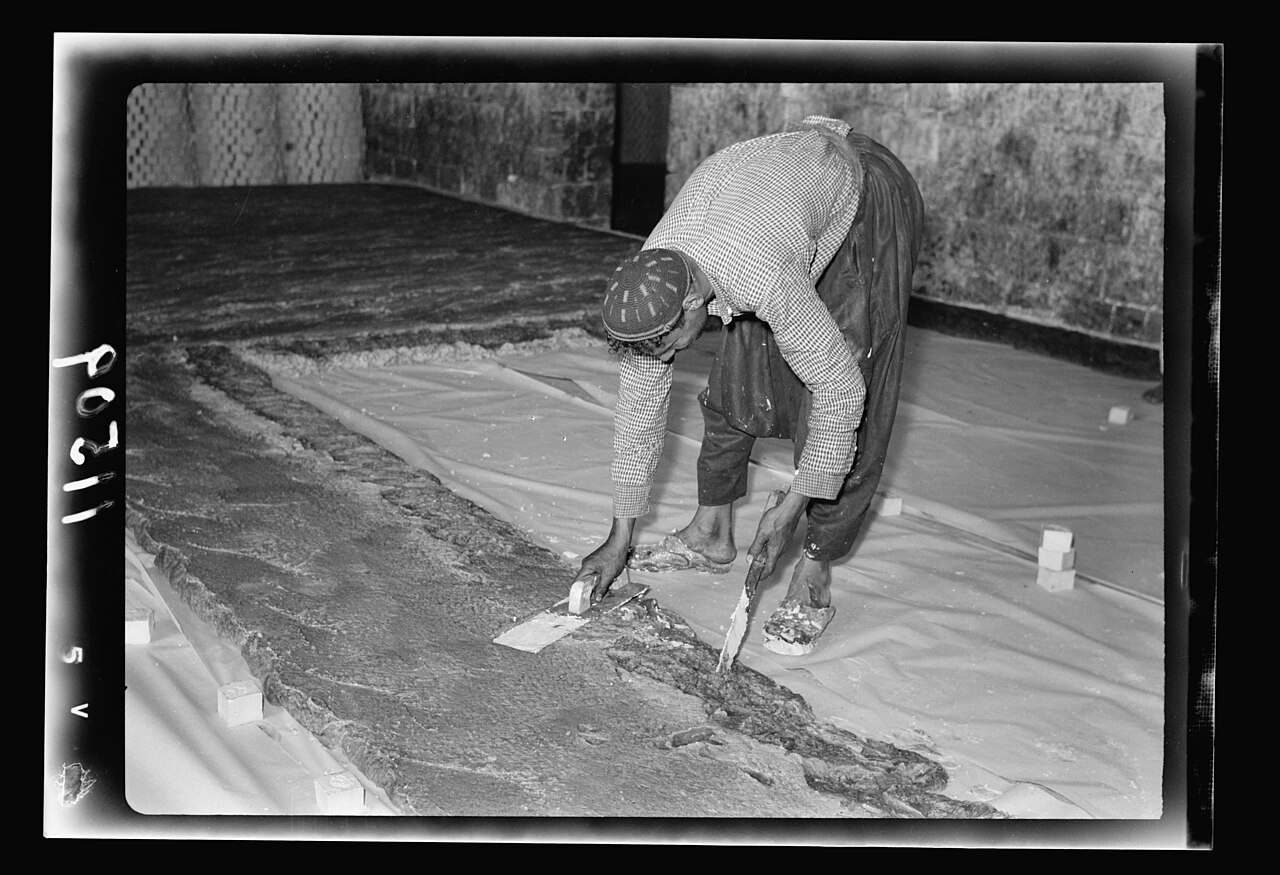
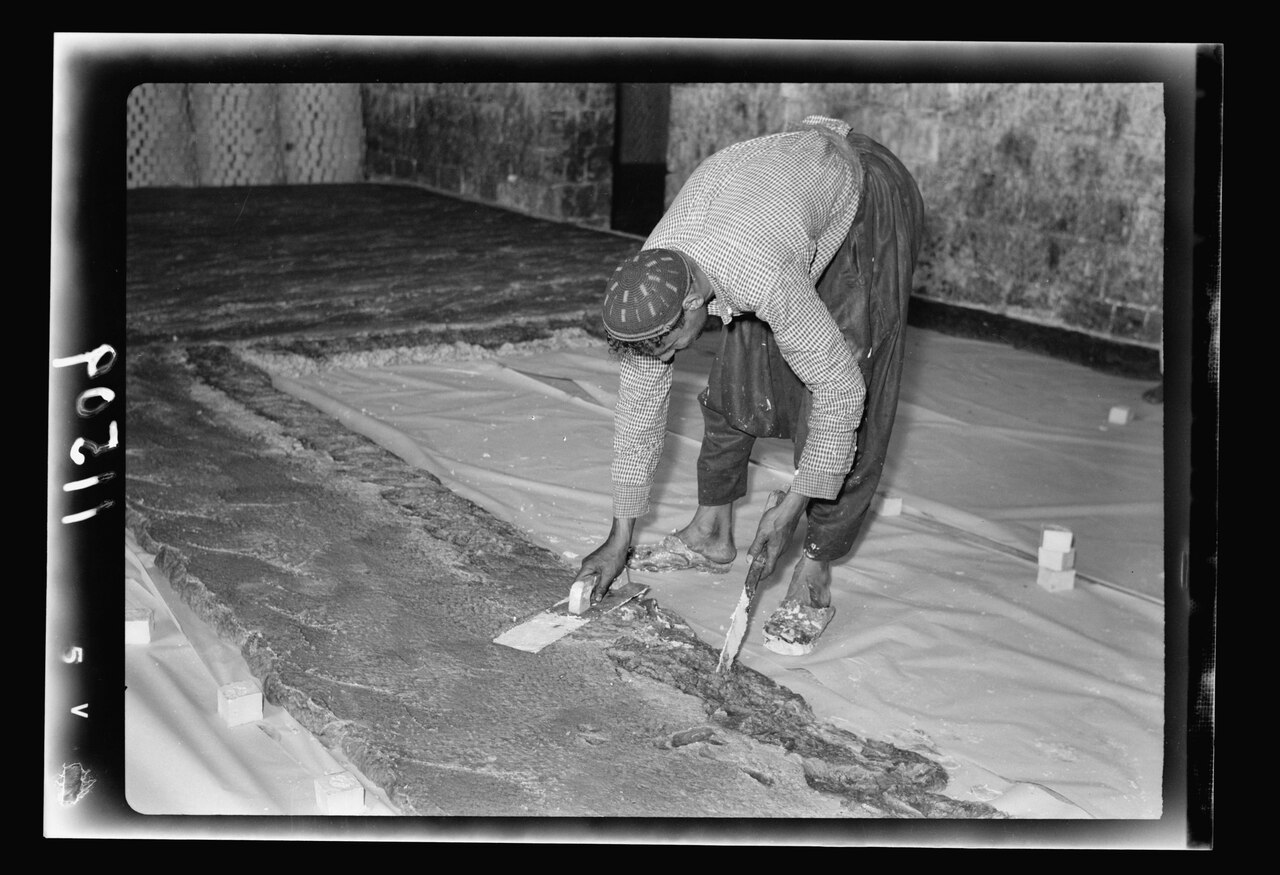
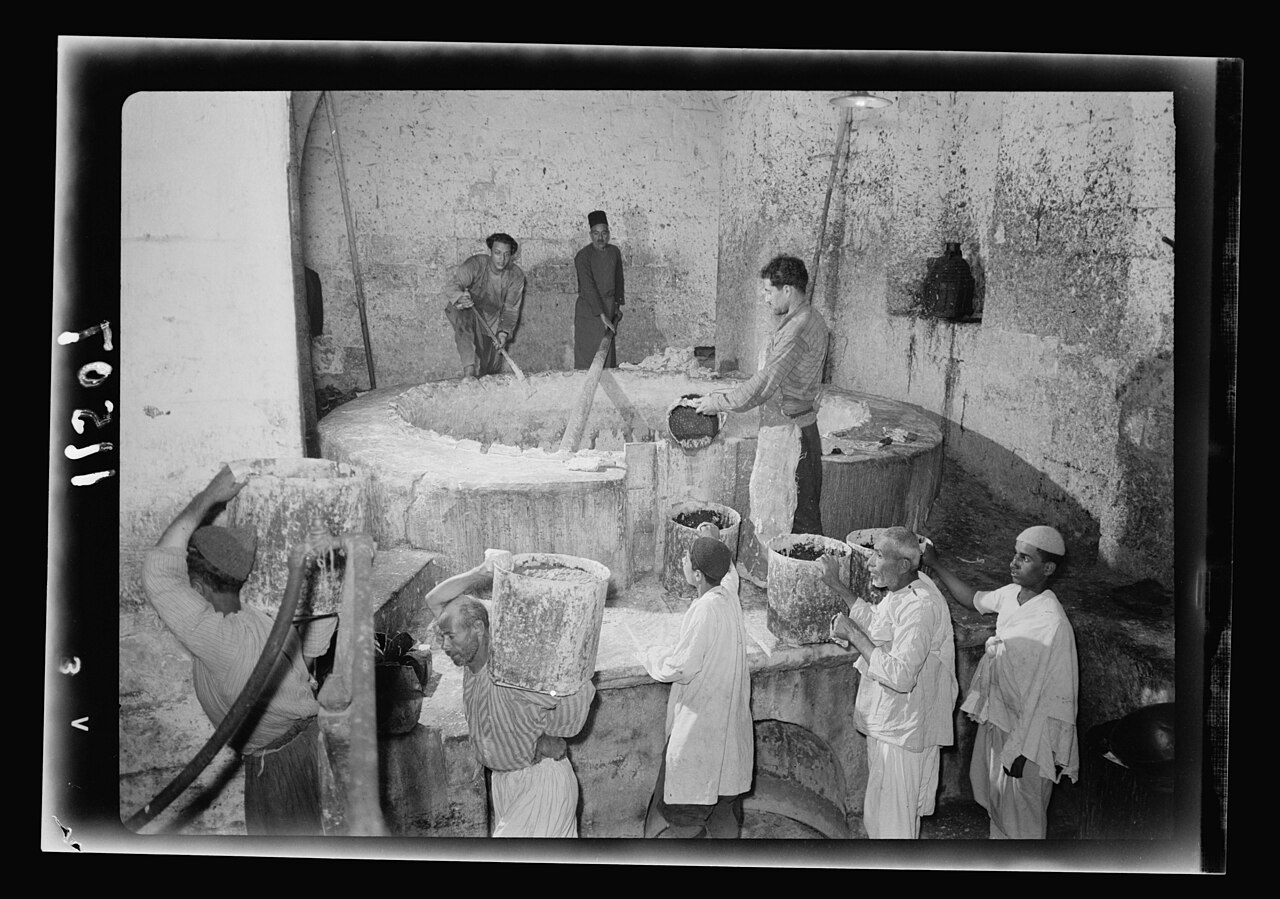
The soap itself remains deceptively simple in composition: virgin olive oil, water, and an alkaline sodium compound derived from barilla-plant ashes gathered along the Jordan River and mixed with local lime. The mixture is heated in large copper vats set over fermentation pits, yielding a dense ivory bar with virtually no fragrance. Yet this straightforward recipe carries enormous cultural weight. In December 2024 UNESCO inscribed the "Tradition of Nabulsi soap making in Palestine" on its list of intangible cultural heritage in need of urgent safeguarding, acknowledging both the craft's significance and the fragility of the conditions under which it survives. Today the soap is still a staple in Nablus and across the West Bank, and it finds buyers in Jordan, Kuwait, and Arab-majority cities such as Nazareth, with a smaller stream of fair-trade exports reaching Europe. In the mid-2000s soap still accounted for over a third of Nablus's total exports, a share that had slipped from 41.5 percent in 2005 to 36.2 percent in 2006 as factory damage and economic restrictions took their toll.
Gallery
Frequently Asked Questions
What exactly is Nabulsi soap?
It is a traditional hard soap crafted in the Palestinian city of Nablus, with virgin olive oil as its core ingredient. The finished bars have a pale ivory tone and carry virtually no fragrance.
What goes into making Nabulsi soap?
The recipe is remarkably simple: virgin olive oil, water, and a sodium-based alkali such as sodium hydroxide to drive the saponification reaction. No artificial dyes or perfumes are added, which is why the bars look and smell so natural.
How big was the Nablus soap industry at its height?
By 1907 the city was home to roughly thirty soap factories that together produced about half of all soap manufactured in Palestine. The craft had long since evolved from a domestic task performed by women into a full-scale local industry dating back to at least the 14th century.
What caused the decline of Nabulsi soap production?
The 1927 Jericho earthquake devastated much of Nablus's Old City, and later conflicts, including the 1967 Arab–Israeli War, dealt further blows to the sector. These disruptions, combined with shifting market conditions, led to a steady contraction of what had once been a dominant local industry.
Is Nabulsi soap still being made today?
Yes—despite decades of disruption, the craft has endured. As of late 2022, at least five factories were still operating in the region, with two of them located in the Old City itself.
More in Palestinian inventions 1-24
Spotted an error? Know more?
This is a living reference — every entry is fact-audited, and reader corrections feed straight into our audit queue. Suggest an edit · See this site's audit record