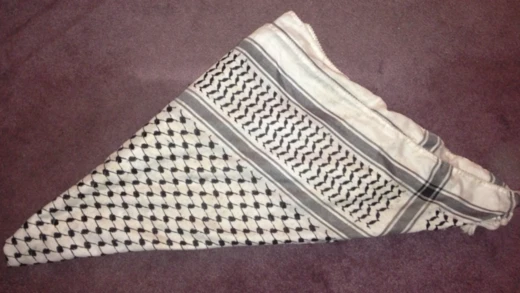
Palestinian keffiyeh
A black-and-white scarf symbolizing Palestinian identity and resistance.

Magnificent Bowtruckle · CC0
The Palestinian keffiyeh is a distinctly patterned black-and-white headdress that has become a powerful symbol of Palestinian nationalism and resistance. Originally worn by peasants and bedouins for sun protection during the Ottoman period, its use as a political emblem dates to the 1936–1939 Arab revolt in Palestine. Outside the Middle East and North Africa, it gained popularity among pro-Palestinian activists and is widely considered an icon of solidarity with Palestinians in the Israeli–Palestinian conflict.
- type
- Clothing item
- origin
- Palestine
- traditional_wearers
- Palestinian peasants and bedouins
- symbol_of
- Palestinian nationalism and resistance
- notable_associations
- Yasser Arafat, Leila Khaled, Fatah, PFLP
- production
- Historically made in Hebron; now largely imported from China
Lore & Background
During the Ottoman period, the keffiyeh signaled that the wearer was rural, in contrast to the tarboosh worn by urban classes. Early Jewish migrants to Mandatory Palestine adopted it as part of the authentic local lifestyle. The white keffiyeh became a symbol of Palestinian nationalism during the Arab Revolt of the 1930s, reaching a peak in 1938 when the revolt's leadership ordered urban classes to replace their tarbush hats with the keffiyeh to create unity and allow rebels to blend into cities.
Its prominence increased during the 1960s with the Palestinian resistance movement and its adoption by Yasser Arafat. Arafat made the black-and-white fishnet pattern his personal trademark, wearing it wrapped around his head with an agal and draping it over his right shoulder in a triangle shape resembling the territory claimed by Palestine. Leila Khaled, a member of the armed wing of the Popular Front for the Liberation of Palestine, was photographed wearing the keffiyeh in the style of a hijab, which brought her iconic status and was seen as a statement of equality with men in the resistance.
The colors of stitching became politically associated: traditional black-and-white keffiyehs with Fatah, and red-and-white with Marxist groups like the PFLP. In 2021, clashes occurred at Al-Azhar University after Hamas security demanded removal of black-and-white keffiyehs, seen as targeting Fatah symbolism.
Reader's Guide
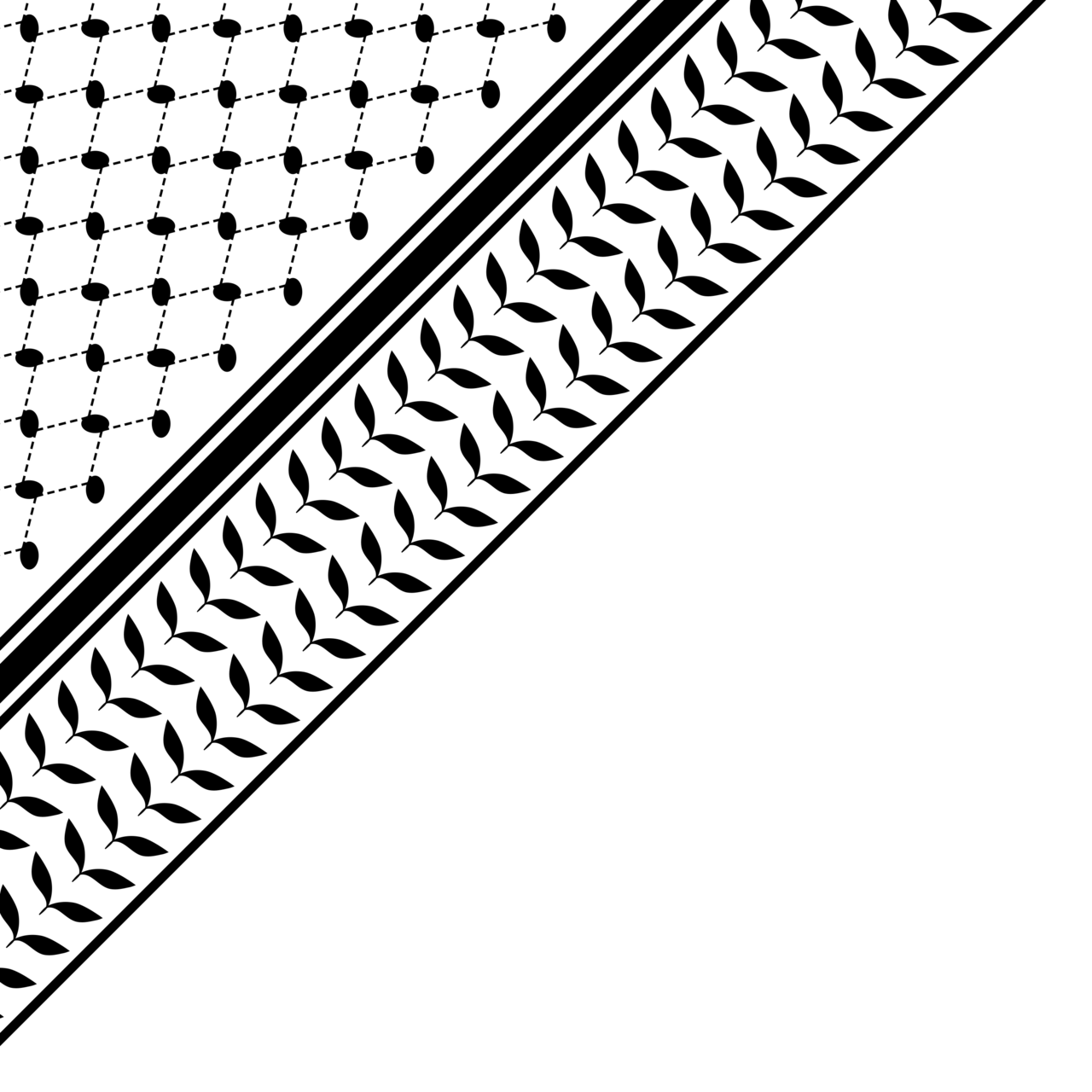
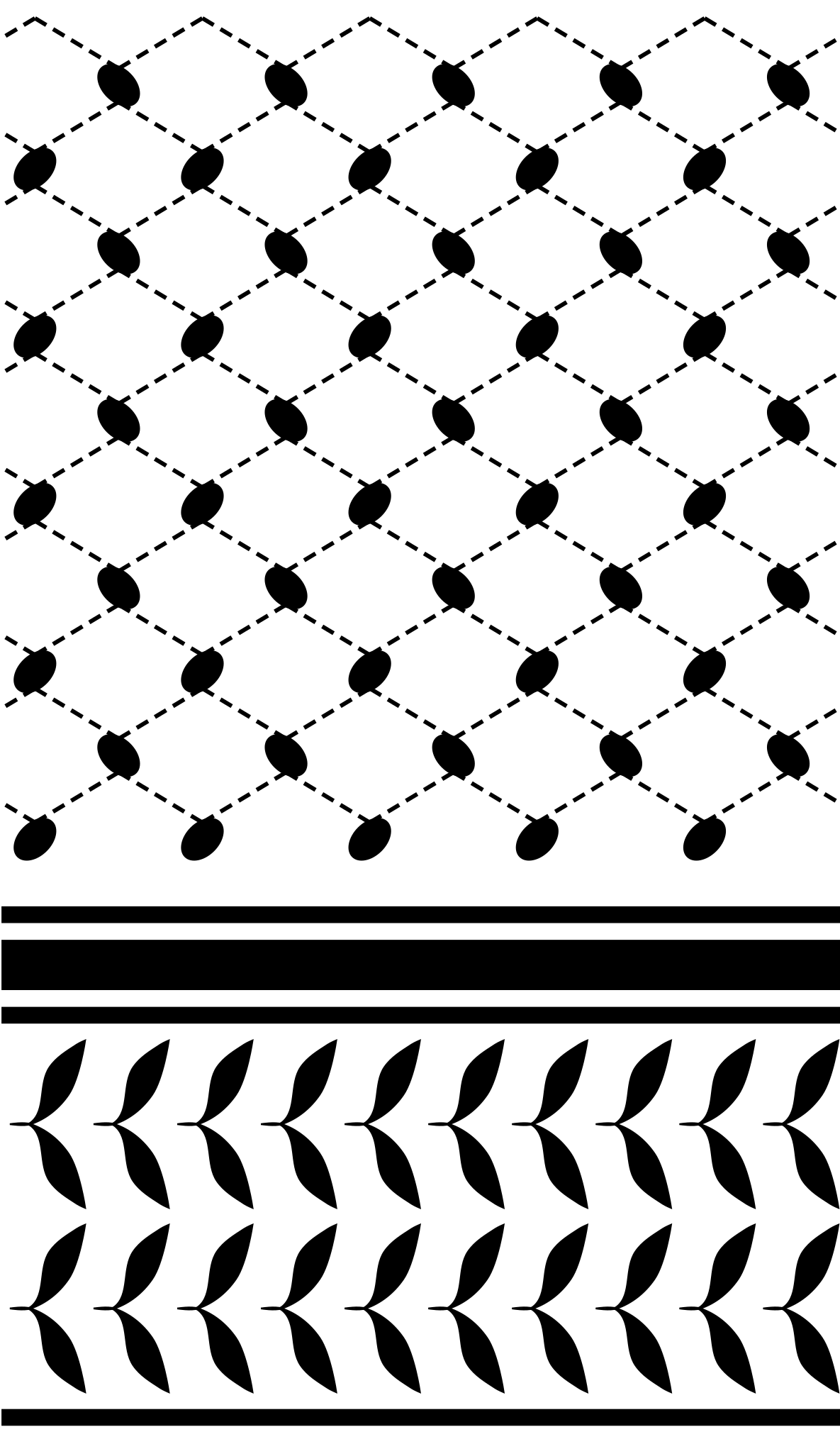
The Palestinian keffiyeh's significance extends from its practical origins as sun protection for peasants to its role as a unifying nationalist symbol during the 1936–1939 Arab revolt. Its adoption by Yasser Arafat and Leila Khaled cemented its place in the Palestinian liberation movement, with specific patterns and colors denoting political factions. In the West, it became a widespread emblem of solidarity, worn by activists and even political figures like Spanish Prime Minister José Luis Rodríguez Zapatero and Colombian President Gustavo Petro. The keffiyeh has also sparked debates over cultural appropriation, with fashion brands using the print and facing criticism. Production has shifted largely to China, though the Hirbawi Textile Factory in Hebron remains the only Palestinian manufacturer, struggling to meet demand after the 2023 Gaza war. The patterns—olive leaves, fishnet, and bold lines—carry symbolic meanings of strength, connection to the sea, and trade routes. The keffiyeh remains a potent and contested symbol of Palestinian identity and resistance.
Did You Know?
- The black-and-white fishnet pattern keffiyeh became Yasser Arafat's personal symbol; he wore it draped over his right shoulder in a triangle shape to resemble the territory claimed by Palestine.
- Leila Khaled was photographed wearing the keffiyeh in the style of a hijab after hijackings, which was unusual as the keffiyeh is associated with Arab masculinity.
- In 2021, clashes broke out at Al-Azhar University after Hamas security demanded removal of black-and-white keffiyehs, seen as targeting their association with Fatah.
- The Hirbawi Textile Factory in Hebron is the only Palestinian manufacturer of keffiyehs; after the 2023 Gaza war, demand doubled but monthly production is only 5,000.
Origins and the Dissolution of Class Boundaries
The keffiyeh's story begins not as a political statement but as practical desert wear. During the Ottoman era, Palestinian farmers and Bedouin communities draped the white cloth over their heads to shield themselves from the harsh sun. Beyond its utilitarian purpose, the headscarf carried a clear social message: it marked the wearer as rural, standing in deliberate contrast to the tarboosh favored by city-dwelling elites. This class distinction would later dissolve in a dramatic political moment. When the Arab Revolt erupted in the 1930s, the white keffiyeh shed its purely peasant associations and became a banner of Palestinian nationalism. The turning point came in 1938, when the revolt's leadership issued a directive that urban Palestinians abandon their tarbush hats and adopt the keffiyeh instead. The decision served a dual purpose: it forged a visible sense of unity across social strata, and it gave rebels a practical means of blending into city crowds. By the end of the 1936–1939 uprising, the scarf had crossed the boundary between countryside and city, embedding itself in the broader Palestinian identity.
Arafat's Personal Emblem and Color Politics
The keffiyeh reached its most recognizable global association through Yasser Arafat, who elevated the black-and-white fishnet-patterned scarf into a personal emblem from the 1960s onward. Arafat almost never appeared in public without it, wrapping it around his head with an agal in a semi-traditional fashion and tucking a matching piece of cloth into the neckline of his military fatigues. His most distinctive choice was draping the scarf over his right shoulder alone, folding it into a rough triangular shape that echoed the outline of the territory Palestinians claimed. No other Palestinian leader has replicated this particular arrangement, making it inseparable from Arafat's individual image. He would occasionally swap the keffiyeh for a military cap or, in cold weather, a Russian-style ushanka, but the scarf remained his default. Stitch colors also carried political weight: the black-and-white version became linked to Fatah, while red-and-white variants were adopted by Marxist groups such as the PFLP. In 2021, this color-coded association sparked clashes at Al-Azhar University when Hamas security forces demanded students remove their black-and-white keffiyehs, an act critics attributed to the scarf's Fatah ties.
Leila Khaled and the Gendered Garment
The keffiyeh's long association with Arab masculinity was challenged in a striking way by Leila Khaled, a member of the PFLP's armed wing. After the TWA Flight 840 hijacking and the Dawson's Field incidents, photographs of Khaled circulated widely in Western newspapers. In these images she wore the keffiyeh wrapped around her head and shoulders in the style of a Muslim woman's hijab—a clear departure from the traditional male presentation. The most iconic of these photos was captured by Pulitzer Prize-winning photographer Eddie Adams. The images propelled Khaled to iconic status not only within the Palestinian liberation movement but across global leftist circles. Many observers interpreted her choice as a deliberate fashion statement asserting her equality with male fighters in the resistance, subverting the gendered expectations attached to the garment. The keffiyeh, long a marker of rural Palestinian manhood, was thus recontextualized as a symbol capable of crossing gender lines, expanding its symbolic vocabulary and cementing its place in the visual language of Palestinian political identity.
Global Solidarity and the Appropriation Debate
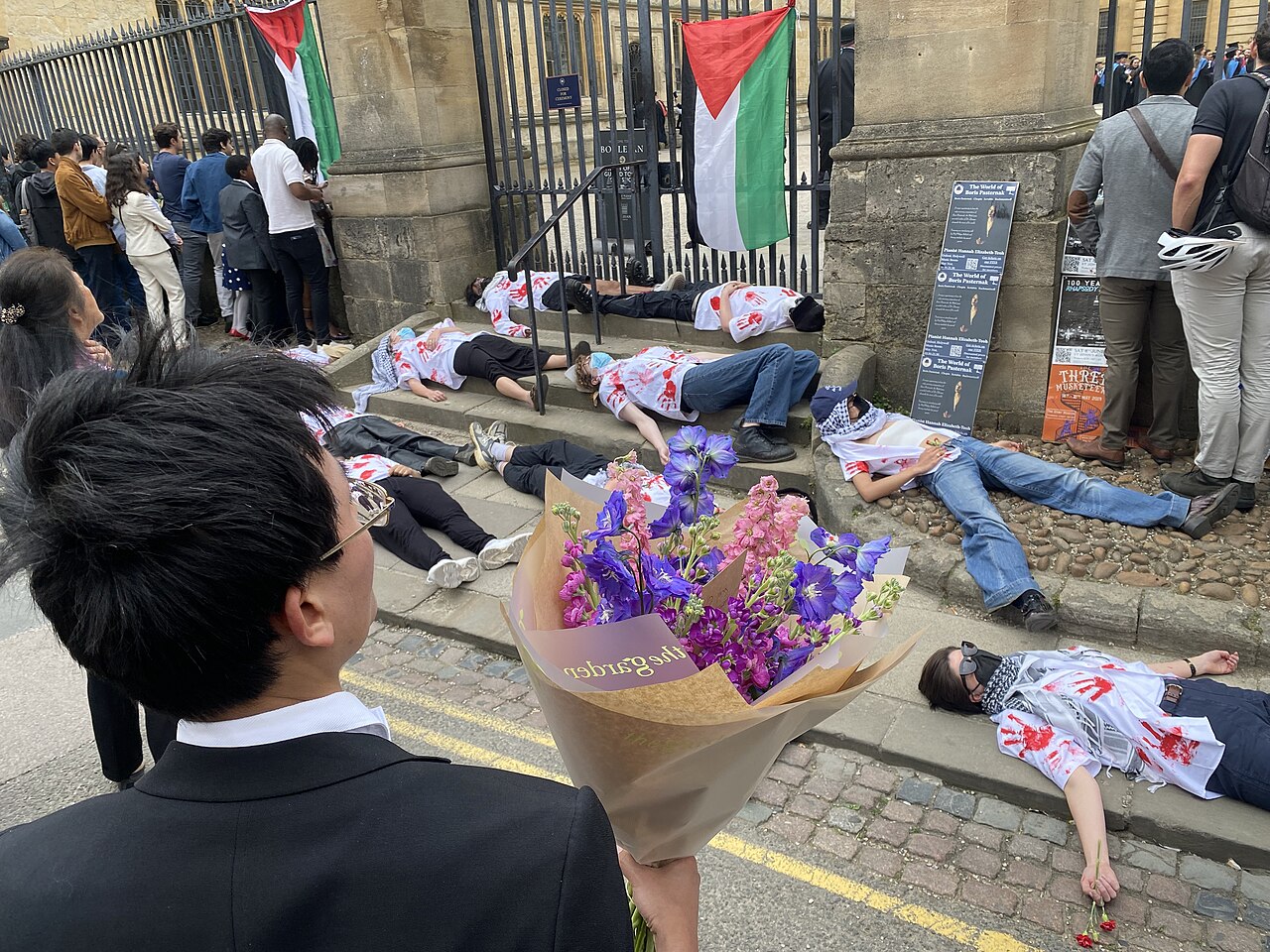
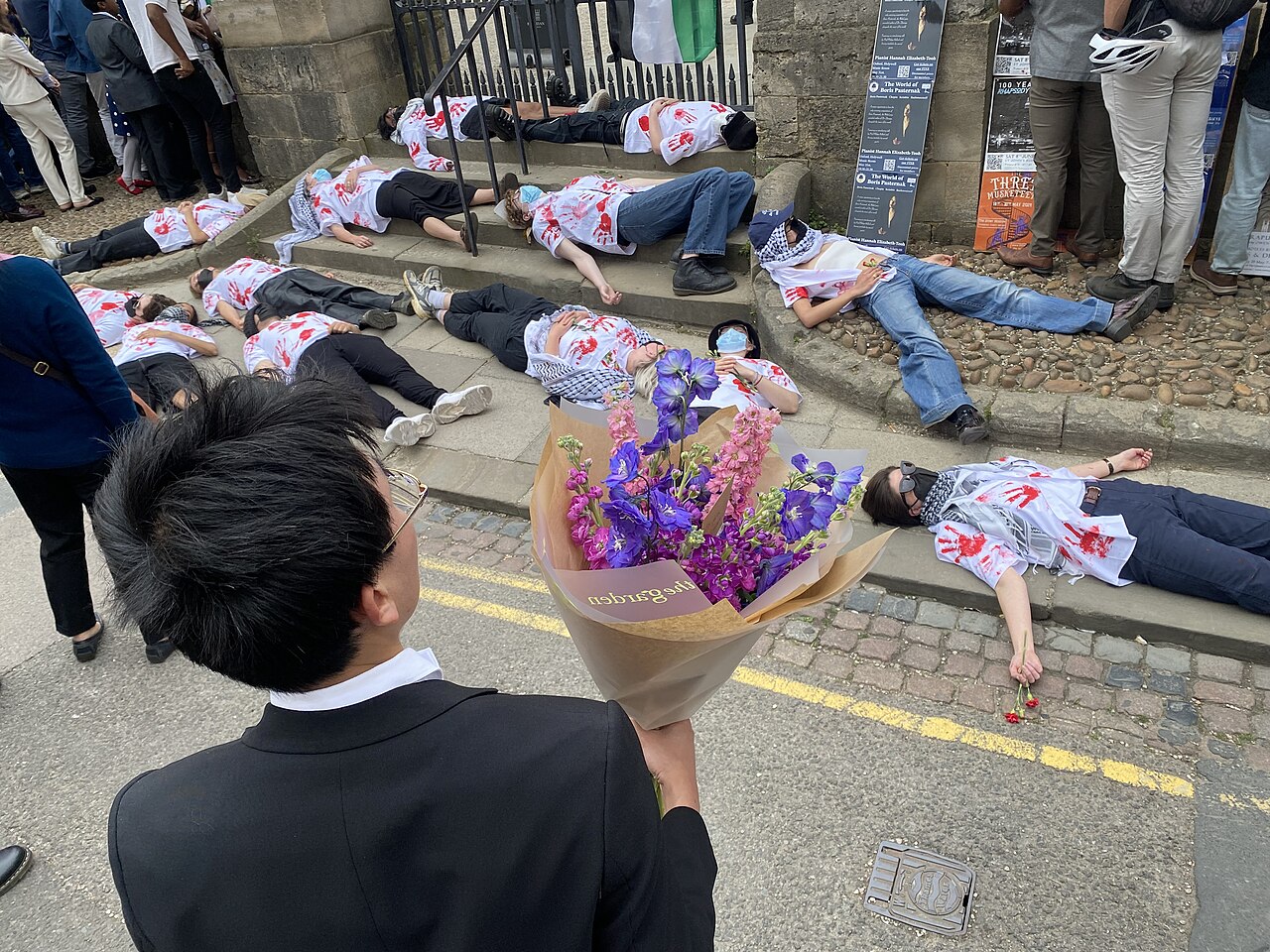
Beyond the Middle East and North Africa, the keffiyeh found a second life as a badge of solidarity among pro-Palestinian activists in Europe and North America. Western wearers typically knot the black-and-white scarf around the neck like a neckerchief, letting the fabric drape over the back, while rectangular versions feature the Palestinian flag or Al-Aqsa imagery on the knitted ends. High-profile political moments have amplified its visibility: in 2006, Spanish Prime Minister José Luis Rodríguez Zapatero accepted a keffiyeh from an audience and posed in it after a speech criticizing Israel; in September 2025, Colombian President Gustavo Petro wore one in Times Square during a pro-Palestinian rally, prompting the U.S. State Department to revoke his visa hours later. The pattern's migration into mainstream fashion—by brands such as Topshop, ASOS, and the Israeli label Dodo Bar Or—has sparked recurring debates over cultural appropriation. In 2007, Urban Outfitters pulled keffiyehs from shelves after a Jewish blog criticized the retailer's "anti-war woven scarf" label. British-Palestinian rapper Shadia Mansour addressed the issue head-on in her 2011 single "al-Kūfīyah 'Arabīyah," insisting the scarf's origins and meaning belong to the Arab and Palestinian world.
Gallery
Frequently Asked Questions
What exactly is a Palestinian keffiyeh?
It is a black-and-white patterned scarf or headdress that began as practical sun protection for Palestinian farmers and Bedouins during the Ottoman era. Today it serves as one of the most instantly recognizable visual markers of Palestinian national identity.
When did the keffiyeh shift from farm utility to a political symbol?
That turning point came during the 1936–1939 Arab revolt in Palestine, when the scarf started being worn deliberately as a badge of resistance. Figures such as Yasser Arafat and Leila Khaled later cemented its association with Palestinian political movements like Fatah and the PFLP.
Who originally wore the keffiyeh and for what purpose?
It was everyday headwear for Palestinian peasants and Bedouin herders who needed shade while working outdoors. The Ottoman-period working class is its traditional wearer base, long before anyone attached a nationalist meaning to the pattern.
Where are keffiyehs manufactured today?
Historically they were produced in Hebron, but the vast majority now come from Chinese factories. This shift in production has not diminished the scarf's symbolic weight for Palestinians or their supporters worldwide.
Why is the keffiyeh significant beyond the Middle East and North Africa?
Pro-Palestinian activists around the globe adopted it as a solidarity emblem, making it a staple of protests and media imagery far from the region. It has effectively become shorthand for support of Palestinian self-determination in the Israeli-Palestinian conflict.
More in Palestinian inventions 1-24
Spotted an error? Know more?
This is a living reference — every entry is fact-audited, and reader corrections feed straight into our audit queue. Suggest an edit · See this site's audit record