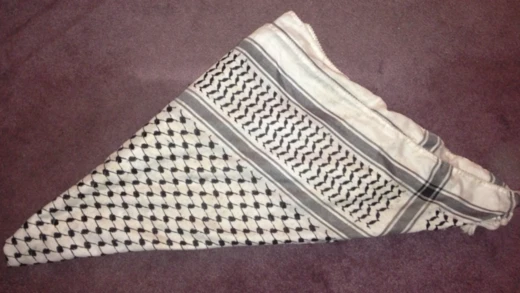
Palestinian handicrafts
Traditional crafts produced by Palestinians for centuries.

Palestinian handicrafts are a diverse range of traditional crafts produced by Palestinians, many of which have been made for hundreds of years. These handicrafts include embroidery, pottery, soap-making, glass-making, weaving, olive-wood and mother of pearl carvings, bamboo furniture, and stonemasonry. Certain West Bank cities—Bethlehem, Hebron, and Nablus—are renowned for specializing in particular crafts, with the sale and export of these items forming a key part of each city's economy.
- field
- Handicrafts
- nationality
- Palestinian
- known_for
- Embroidery, soap-making, glass-making, olive-wood carving, weaving, pottery, stonemasonry, bamboo furniture
Lore & Background
Embroidery, an exclusively female tradition, features tatreez (cross-stitch) and tahriri (couching-stitch). The cloth for traditional costumes was a key industry of the destroyed village of Majdal, where Majdalawi weaving—using black, indigo, fuchsia, and turquoise threads on a single treadle loom—continues today through a cultural preservation project in Gaza City. Gaza was historically a center for cloth production, famous for a fine silk called gazzatum, which gave its name to gauze. Bedouin women traditionally wove household items from sheep's wool using a ground loom. A Galilee craftsman learned straw weaving from his grandmother and exhibits woven trays at the Ein Dor Archaeological Museum.
Glass-making has been a key Hebron industry since Roman rule. Olive-wood carving, thought to have begun in Bethlehem in the 4th century CE after the Church of the Nativity's construction, was taught by Christian monks. The wood is carved with simple hand tools, though rough cutting now uses machines. Olive-wood carvings sold to tourists are important to Bethlehem's economy. Nabulsi soap, a castile soap made from olive oil, water, and a sodium compound, has been exported since the 10th century. Pottery shows continuity with ancient forms, fired in open charcoal-fueled kilns. Bamboo furniture is made entirely by hand, and stonemasonry in Beit Jala and Beit Fajjar uses hand-chiseled brick styles.
Reader's Guide
Palestinian handicrafts represent a living cultural heritage that has persisted for centuries despite geopolitical changes. The crafts are deeply tied to specific cities: Hebron for glass, Nablus for soap, Bethlehem for olive-wood carving. These crafts are not merely artistic but economic, forming a key part of each city's economy through sale and export. The article notes that some crafts, like Majdalawi weaving, continue only through preservation projects after the destruction of their original village. Others, like Nabulsi soap, have seen a dramatic decline in production from thirty factories in the 19th century to only two today. The continuity of pottery shapes and techniques from ancient times underscores the deep historical roots of these practices. The crafts also reflect gender roles: embroidery is exclusively female, while weaving and stonemasonry are male-dominated. The use of natural materials—olive wood, sheep's wool, bamboo, olive oil—and traditional techniques, such as hand-chiseling stone or using ground looms, highlights a commitment to artisanal methods. These handicrafts are a testament to Palestinian identity and resilience, preserving skills passed down through generations.
Did You Know?
- Embroidery is an exclusively female artistic tradition in Palestinian culture.
- The fine silk produced in Gaza, called gazzatum, gave its name to the modern fabric gauze.
- Nabulsi soap has been exported across the Arab world and to Europe since as early as the 10th century.
- Olive-wood carving in Bethlehem is thought to have begun in the 4th century CE after the construction of the Church of the Nativity.
More in Palestinian inventions 1-24
Spotted an error? Know more?
This is a living reference — every entry is fact-audited, and reader corrections feed straight into our audit queue. Suggest an edit · See this site's audit record