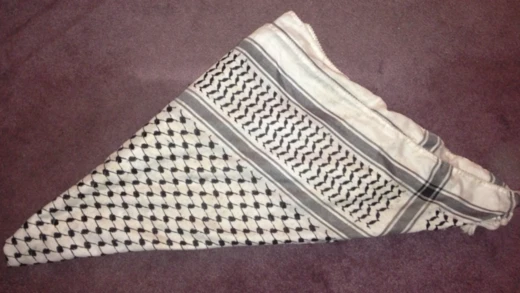
Tatreez
Traditional Palestinian embroidery, a symbol of heritage and resistance.

Tatreez is the traditional embroidery of Palestine, a craft whose contemporary form emerged in the 19th century but whose roots stretch back centuries in Arab Mediterranean communities. The term itself means "embroidery" in Arabic, and the style is most famously used to decorate the thobe, a traditional dress. The motifs and colors stitched into the fabric are not merely decorative; they convey a wearer's regional identity and social ties. In 2021, UNESCO recognized Palestinian embroidery as an important intangible cultural heritage.
The cross-stitch technique central to tatreez is called *fallaḥi*, from the Arabic word for a rural person. While this is the most common style across Palestine, regional variations exist. In Bethlehem, for instance, embroiderers often use a satin stitch known as *tahiri* and may incorporate metallic thread (*qasab*), as the fine fabric of local thobes was less suited to cross-stitch. Historically, each village had its own distinct patterns, with designs that told stories about local people, legends, animals, plants, and beliefs. Over time, these regional differences have blurred and evolved, especially within the Palestinian diaspora. The practice has also taken on political meaning in the context of displacement and resistance, with patterns incorporating nationalist symbols tied to events like the Nakba and the 1967 war.
The origins of tatreez stretch back at least a millennium. Scholar Hanan K. Munayyer points to an 11th-century fragment of geometric silk cross-stitch from Alexandria as an early example. The oldest intact garments with tatreez were found in a 1283 CE burial in Lebanon, and they closely resemble the traditional dress of Ramallah. Many popular motifs echo elements of Arab architecture and mosaic design—for example, the cup and acanthus leaf pattern appears in stone carvings. Historically, materials were locally sourced: silk was cultivated in Palestine from the sixth to the nineteenth century for thread, fabric was woven by men on home looms, and plant dyes like indigo and madder provided color.
A completed piece of tatreez is a tapestry of individual motifs, each carrying symbolic meaning. These designs are passed down through generations and can identify a specific village, region, or even family. Common motifs include the Tree of Life (often a cypress), symbolizing longevity and resilience; the palm tree
- field
- Embroidery / Textile Art
- nationality
- Palestinian
- known_for
- Traditional cross-stitch embroidery (fallaḥi) on thobes; regional motifs; UNESCO recognition in 2021
- origins
- 11th-century Alexandria (fragment); 1283 CE Lebanon (intact garments); 19th century (contemporary form)
Lore & Background
Tatreez, meaning 'embroidery' in Arabic, refers to the traditional style of embroidery practiced in Palestine and Palestinian diaspora communities. The cross-stitch style called fallaḥi has been used for centuries. Historically, each village in Palestine had distinct tatreez patterns, with unique designs telling stories about local people, legends, animals, plants, and beliefs. The craft was originally practiced in rural areas of Palestine but is now common across the diaspora. Materials were locally sourced: silk was cultivated in Palestine from the sixth to the nineteenth century, fabric was woven by men on home looms, and plant dyes such as indigo or madder were used.
Reader's Guide
Tatreez holds deep social and political significance. After the 1948 Nakba, the practice was disrupted as over 700,000 Palestinians became refugees, and many treasured works were lost. Embroidery became a means of economic survival and cultural preservation, with women's organizations forming to support the craft. A second revival occurred in the 1970s and 1980s after the 1967 Six-Day War, when commercialization increased and practicing tatreez became a revolutionary act. The Palestine Liberation Organization established tatreez workshops in refugee camps. During the First Intifada, nationalist art and imagery influenced resistance, and tatreez was politicized. The motifs—such as the Tree of Life, palm tree, Pasha's Tent, and Star of Bethlehem—carry symbolic meanings tied to environment, history, and daily life. Regional differences remain: Bethlehem uses satin stitch (tahiri) and metallic thread; Ramallah features geometric and floral patterns on white linen; Gaza and Hebron have distinct styles with vibrant colors. Tatreez continues to evolve in the diaspora, embodying cultural heritage and activism.
Did You Know?
- A fragment of geometric silk cross-stitch embroidery from 11th-century Alexandria is considered one of the first examples of tatreez-like embroidery.
- Dresses found in a 1283 CE burial in Lebanon are the earliest intact garments with tatreez embroidery and strongly resemble the regional dress of Ramallah.
- The cross-stitch style is called fallaḥi, from the Arabic word for a rural person, fallaḥ.
- During the First Intifada, Israeli censorship extended to the colors of the Palestinian flag, which were not permitted to be shown in public.
More in Palestinian inventions 1-24
Spotted an error? Know more?
This is a living reference — every entry is fact-audited, and reader corrections feed straight into our audit queue. Suggest an edit · See this site's audit record